 EN
EN  ES
ES CA
CA PT
PT FR
FRThe oldest known data about magic dates back to ancient Egypt. Thanks to the inscription on a papyrus, we know that there was a magician called Dedi who managed to astonish the great King Cheops. The illusion trick he performed left the entire audience speechless; he cut off the head of a goose and, after a series of incantations, managed to make the goose walk with its head back in place, as if nothing had happened. It caused such a sensation that people even said that Dedi was a messenger of the gods.

Meanwhile, in the streets —not only in Egypt but in many other places—, games with cups, balls and goblets were very common and filled people with wonder.
In North America, the sorcerers of the tribes also performed great feats, such as placing an arrow inside a basket and, while the sorcerer danced, the arrow came to life and rose vertically until it was suspended in the air, outside the basket… Amazing, isn't it?

Later, during the Middle Ages, 3 variants of magic became known: elegant magic performed for kings and nobles; street performances for the common people; and black magic, associated with supernatural powers.
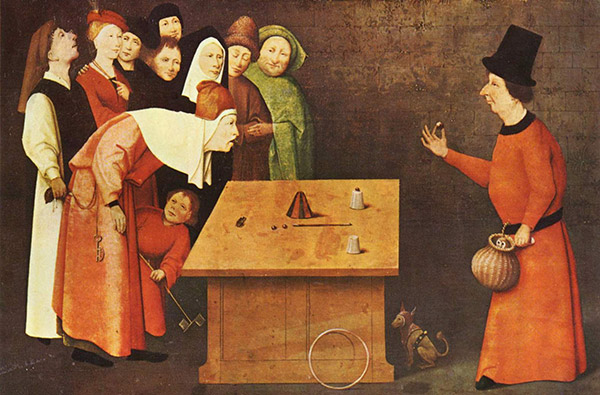
During the following century, illusionism in Europe gained great relevance, and it was possible to see magic shows in large theatres.
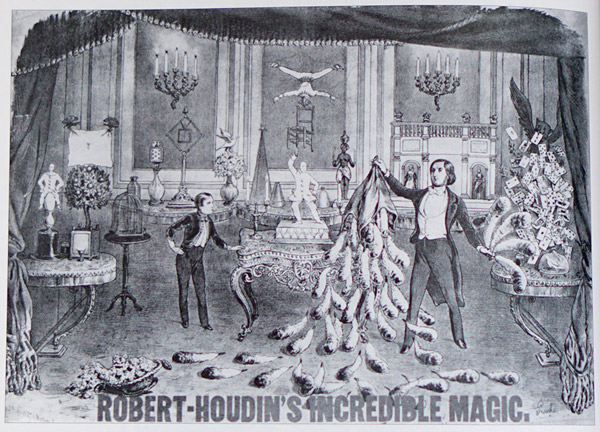
In the 19th century, a magician appeared who completely renewed and revolutionised this art. He was the great Robert Houdini.